To access the video, use this LINK.
If you use FireFox instead of Safari, you will not need to update your flash player.
Showing posts with label Socials 10-4. Show all posts
Showing posts with label Socials 10-4. Show all posts
Tuesday, 9 June 2015

Tuesday, 2 June 2015
Socials 10-2/10-4: The Chinese in BC
This week in Socials 10 we looked at the People's History episode titled "Gold Mountain" as a means to start a discussion about the Chinese experience in BC. We saw just how much racism existed towards Asians in this province. It was BC who petitioned the Canadian government to impose the ever-increasing Head Tax as a way to stem the tide of Chinese immigrants after the initial influx of miners and the later influx of CPR workers. We also discussed immigration in general and the nature of the evolving demography here in BC. There is no homework.


 |
| Students are always shocked that a company would produce a machine and give it such a "racist" name. |


Thursday, 28 May 2015
Socials 10-4: BC History
Please see yesterday's Socials 10-2 post. There is no homework unless you have old work still outstanding.
Tuesday, 26 May 2015
Socials 10-2/10-4: Work periods to complete "early BC history sketchnotes"
Monday and Tuesday's classes were given as work blocks to compose the sketchnotes.
The sketches are due next class.
The sketches are due next class.
Thursday, 14 May 2015
Socials 10-4: BC summary research Day 1 of 2
Today half of the class was away at the PNE. Those who attended used their time to compile information on the gold mining activities around the Fraser River and the Cariboo. We will have two more classes for this activity - one for research and one to compose the sketchnote.
Tuesday, 12 May 2015
Socials 10-4: Gold mining
Today we had our second lesson on early BC history. In the end, I want you to be able to create a sketchnote about early BC.
 |
| Last year's sketch |
 |
| Today's sketch |
Our focus this afternoon was the gold rush(es). We started by looking at a photo of early Barkerville (p. 222 of the text) to draw conclusions about planning, need and use. We then learned some basics about traditional gold mining equipment including the pan, rocker box, sluice box and Cornish wheel. Next we saw a short clip showing a modern variant of the traditional sluice box (individuals are still prospecting in BC on small scale operations just like they did in the past). We then watched a segment with BC mining history legend Bill Barlee who explained the principles involved in placer mining (I created a sketchnote to help you curate the facts). We ended with some computer research time - links to key sites are found HERE - in order to be able to create a sketchnote at a later date. We will use Thursday's class to complete our research and Tuesday's class to draw the sketch.
Socials 10-2/10-4 Gold Mining Research
We will use these (and other) sites to research the BC gold rush. Our goal is to create a sketchnote to show our thinking/learning.
1. http://www.bcarchives.gov.bc.ca/exhibits/timemach/galler04/frames/main.htm
2. http://gold.royalbcmuseum.bc.ca
3. http://www.canadahistoryproject.ca/1871/1871-05-gold-rush.html
4. http://www.cariboogoldrush.com/contents.htm
5. http://www.barkerville.ca
6. http://opentextbc.ca/geography/chapter/5-4-case-studies/
Monday, 11 May 2015
SS10-4: Intro to BC history
 Today I gave a short lesson to set the scene as we move our focus to the west coast. We looked at the geography of the region as well as some of the geopolitical (imperialistic) forces at work. I spoke of "Manifest Destiny" and the risk from the influx of US citizens in the colony after gold was discovered on the Fraser River. We then met in groups of four to consider the situation faced by Governor James Douglas as he "welcomed" thousands of gold-hungry miners into the region. I was pleased with the quality of your deliberations. We spent the last part of class sharing our ideas and I fleshed out the role of Colonel RC Moody and his Royal Engineers, both in the creation of the Cariboo Road and the surveying of the new capital at New Westminster. There is no homework.
Friday, 8 May 2015
Socials 10-4: Intro to BC history
Today we began our new unit. I started by giving the test result out and then we discussed the geographic and imperialistic pressures on early BC. Next, we started to consider the gold rush. We looked at the California and the effects of those miners coming north to BC at the close of the California rush. We revisited pp. 213-16 in the text and then we met in groups of four to strategize as if we were Governor James Douglas inundated with thousands of gold-hungry Americans. We ended by sharing some of our solutions while ordering them as short. mid. or long term solutions.
 |
| Background |
 |
| The question |
 |
| Our solutions |
Thursday, 7 May 2015
Socials 10-4: The West: unit test
Today we took the whole block to write the unit test. I will have the results for you tomorrow! Tomorrow we will begin a study of BC including the gold rush. There's no time to relax; we'll be moving a bit faster now while we work towards the end of the course.
Tuesday, 5 May 2015
Socials 10-4: Unit review and test prep
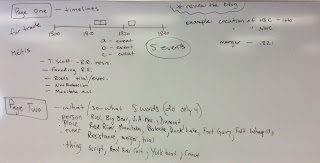
Today we watched two short segments of the People's History (Riel's hanging and J.A. Macdonald's tour across the country afterwards) and then looked at the test format for Thursday. I strongly suggest you review the blog posts in addition to your notes. Don't forget to review your paragraphs: one of those will be a prompt for the long writing section at the end of the test (there will be a choice of two prompts)
 .
.


Thursday, 30 April 2015
Socials 10-4: The National Policy
Please see yesterday's post from the other class. The only thing we didn't get to were the two video clips. We will cover them on Tuesday when we review for the unit test, scheduled for Thursday.
Wednesday, 29 April 2015
Socials 10-4: National Policy
Today we began with a brief lesson and discussion on the National Policy and the role of tariffs in international trade. Next, I asked you to do a pair/share of pp. 183-91. I asked you to create three bullet points for each section with a separate heading. After that we viewed two segments of the People's History: "Fancy Paper City" about the National Policy; and, "Ocean to Ocean" about the CPR.
 |
| Boardnotes from the lesson |
 |
| The sketchnote to highlight the three elements of the Policy |
Tuesday, 28 April 2015
Tuesday, 21 April 2015
Socials 10-2, 10-4: Riel Mock Trial: Day One (of Two)
Today we set up the mock trial and learned some basics about how a criminal trial works. Next, I detailed some of the things to look out for in the Crown's case and that of the Defence. I thought each class did a good job with their reading. Next class we will review the Crown's case and then move on to the witnesses for the Defence. I heard some good reading on Day One, but the biggest reaction and thus the Academy Award would have to go out to Jamie, thus far.
Thursday, 16 April 2015
Socials 10-4: Wrapping up Term Three assignments
Today we used our time to complete any outstanding work students had. Those who finished started the readings for the last few topics left before we have our unit test for The West. At the end of the block we chose parts for the Riel mock trial that we will do next week.
 |
| Here are the readings. |
 |
| And the parts! |
Thursday, 9 April 2015
Socials 10-4: Batoche
 |
| Venn diagram |
Wednesday, 8 April 2015
Socials 10-4: Intro to the NW Rebellion
 |
| Perspectives: what might the NWMP perspective be? and the Government of Canada? |
Tuesday, 31 March 2015
Socials 10-4: The Métis Move to Resistance
Today we looked at the conditions that led the Métis to begin their resistance to the Canadian government's "incursions" in their territory. We introduced the idea that while the Métis social structure and government was "different" than that of the Europeans, it had a definite and purposeful structure nonetheless. For example, we talked of the importance of the role of the bison hunt captain and how the rules of the hunt were organized to increase the chance of success (for the whole group). We also discussed how punishments in one culture, might seem odd in another. I used the example of contemporary Canadian Forces punishments (specifically a dishonourable release/discharge) as an example of how the Métis tradition of shaming a thief could be seen to have some modern parallels.
Next, we read pp. 158-161 in the text (just the text on the white pages). I asked that you record three bullet points showing things you learned and two questions that you still wonder about. We ended the lesson by watching "If We are Rebels" from The People's History. It introduced us to Louis Riel and the reception the Métis gave to the surveyors, including the "capture" of Fort Garry at the start of the Red River Resistance.
If you have completed today's reading there is no homework.
Next, we read pp. 158-161 in the text (just the text on the white pages). I asked that you record three bullet points showing things you learned and two questions that you still wonder about. We ended the lesson by watching "If We are Rebels" from The People's History. It introduced us to Louis Riel and the reception the Métis gave to the surveyors, including the "capture" of Fort Garry at the start of the Red River Resistance.
If you have completed today's reading there is no homework.
Friday, 27 March 2015
SS10-4: The Métis: Day 2
Today we debriefed yesterday's assignment and had a lighthearted discussion at the same time. To finish up, I asked you to read pp.151-57 in your text: this includes two sections (or subheadings) and I asked that you create five bullet points and one question for each.
Subscribe to:
Posts (Atom)